Taking the stress out of the Fodmap diet


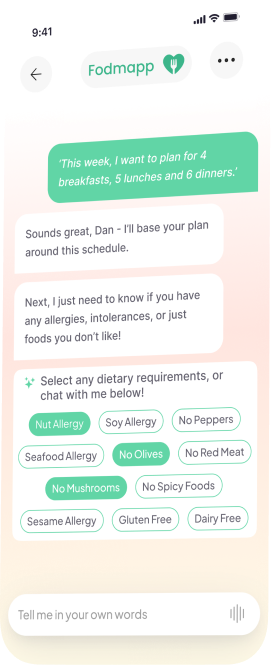










Following a low Fodmap diet can be life changing for those diagnosed with IBS, but also an incredibly stressful dietary plan to follow. Patients juggle ingredient lists, hear and read conflicting advice, and experience endless second guessing and anxiety at mealtimes.
I set out to design a digital companion that removes the mental load of decision-making. The goal was to help people feel confident in what they can eat, plan meals with ease, and build lasting habits, without the anxiety or information overload.

Product
Personal, AI Assisted Dietary Planning App
Skills
Research, Prototyping, AI Implementation

Challenge
The FODMAP diet involves restricting Fermentable Oligosaccharides, Disaccharides, Monosaccharides and Polyols (FODMAP). This group encompasses a vast range of everyday foods from garlic to wheat flour.
A low FODMAP diet is the number one evidence based dietary intervention for IBS. Following the diet however requires extensive food knowledge and label reading, and for many is a significant challenge to follow for an extended period of time.

15% of the global population suffers from irritable bowel syndrome (IBS)

86%
IBS patients have reduced symptoms following a low FODMAP diet

Just 1 in 3 patients remain adherent to the diet after 12 months
Objective
The primary objective was to design a mobile app that would reduce decision fatigue and increase dietary confidence for IBS sufferers navigating the low FODMAP diet. The app needed to simplify four critical user needs:

Reduce the stress and uncertainty of daily food choices
Turn dietary guidance into simple, actionable steps
Support users across the journey, from planning to shopping to cooking
Build confidence through small, consistent wins
All with the overarching goal of bringing simplicity to the complex but life changing dietary regime.
Discovery
I began with secondary research to establish a clinically accurate understanding of the programme and its challenges. Through this research, I learned about the clinical realities of IBS and its potentially lifelong impact on patients. Crucially though, I learned how complex the FODMAP diet is to follow, and how its success depends on strict adherence.
Strictly avoid all high Fodmap foods to calm the digestive system and establish a symptom free baseline.
Primary Goal
Achieve significant symptom reduction and create a stable baseline for testing.
🥬
Eat only low Fodmap foods
✏️
Track symptoms daily
⌛️
Wait for symptom free period
Elimination
2-6 Weeks
Systematically test high Fodmap foods one at a time to identify personal triggers and tolerance levels.
Primary Goal
Identify which Fodmaps trigger symptoms and determine personal tolerance levels.
🧪
Test one food group at a time
📊
Monitor reactions for 3 days
👍🏼
Return to baseline between tests
Reintroduction
6-8 Weeks
Build customised long term diet by including all tolerated foods whilst avoiding any specific triggers that have been identified.
Primary Goal
Maximise diet variety and nutritional balance whulst maintaining symptom control.
🍽️
Eat as much variety as possible
⚖️
Balance nutrition and tolerance
♻️
Retest triggers periodically
Personalisation
Ongoing
Phases of the FODMAP diet
This desk research was complemented by semi-structured interviews with six participants recruited from online IBS / FODMAP communities. These interviews helped explore the daily routines, frustrations, and coping mechanisms of those recently diagnosed and undertaking the FODMAP diet.

"I spend more time checking food labels than actually shopping, or preparing meals"

“Now that I understand my triggers, I end up eating the same 5 meals that I know are safe for me... It’s getting a bit boring.”

“I'm not a the best cook to begin with, and now I have to navigate this complex diet? I'm constantly second guessing myself - Did I use too much of this? Is that food ‘safe’? It's a lot...”
I used insights from these interviews to map out a user journey map to highlight the key frustrations (and therefore opportunities) for a patient undertaking the FODMAP diet in the weeks post initial diagnosis.
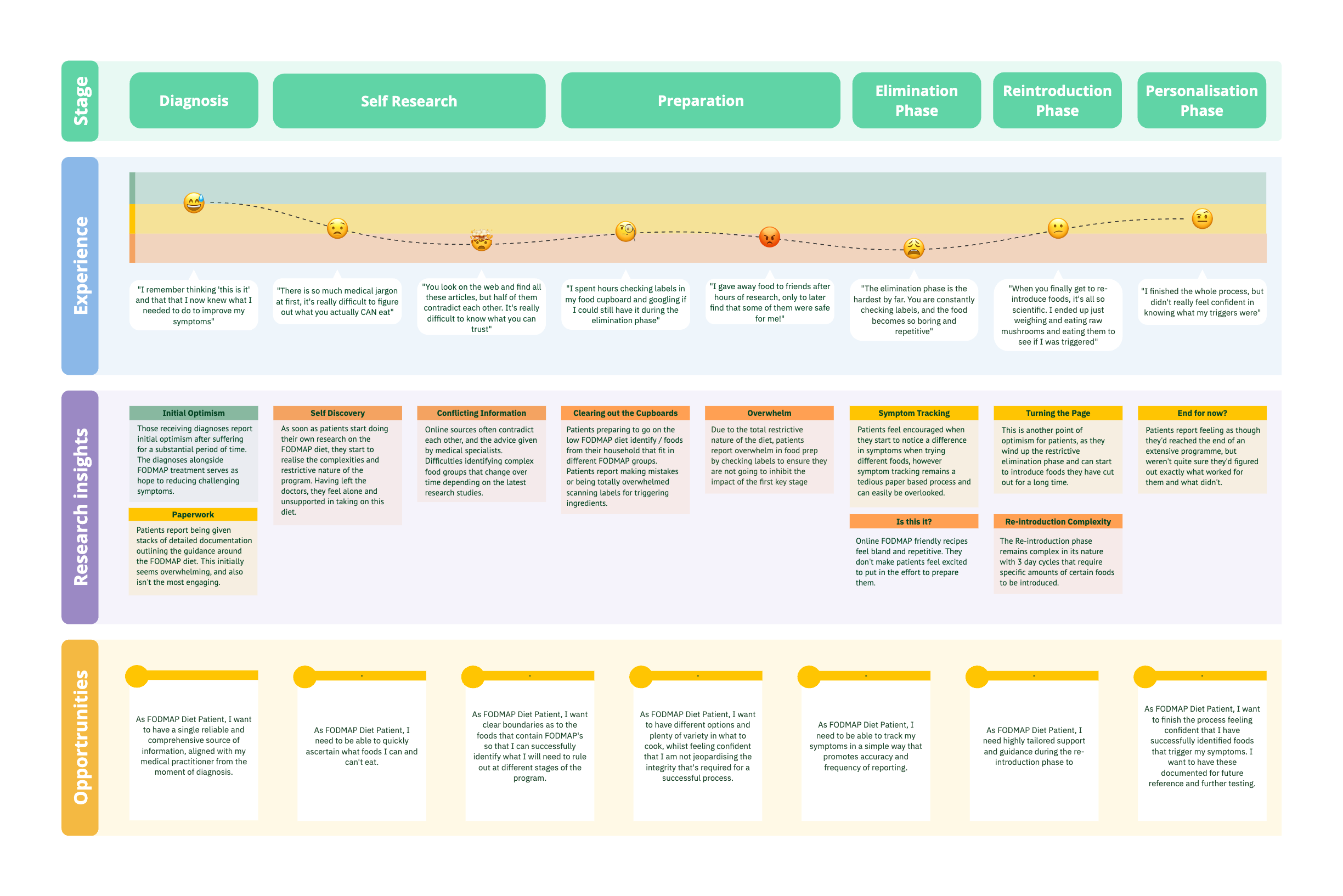
Journey Experience Mapping
Key Insights emerged:
People struggled most in the moment of choice, not in preparation.
The abundance of information made confidence harder, not easier.
Many gave up when they couldn’t find safe substitutions quickly.
This made it clear that success would depend on reducing cognitive load, where other solutions currently on the market provide too many choices, overwhelming their patients.
Ideation
Taking the learnings from discovery, I wanted to explore solutions that serve to three core moments to a patient:
Getting Started
Some users may find this app several weeks into the Fodmap diet. A generic onboarding flow would assume everyone is new to the diet, neglecting the needs of patients who have already started Fodmap. The onboarding needs to intelligently meet users, wherever they are in their journey.
Meal Monotony
Following a low FODMAP diet often results in eating the same "safe" meals repeatedly, leading to food boredom. Users struggling to find exciting, diverse recipes that work within their restrictions are less likely to maintain the diet for the required period.
Shopping List Chaos
Creating FODMAP compliant shopping lists requires extensive checking of recipes and packaging labels. This time consuming activity quickly becomes an overwhelming burden for sufferers. Users need a seamless bridge between exciting recipes and a low stress shopping experience.
I started exploration by developing flow diagrams to map out a clear and conclusive onboarding process, which evolved into initial wireframes, where I started to explore page designs. Throughout this process, I referred back to my research insights to ensure I was solving problems in the right way.
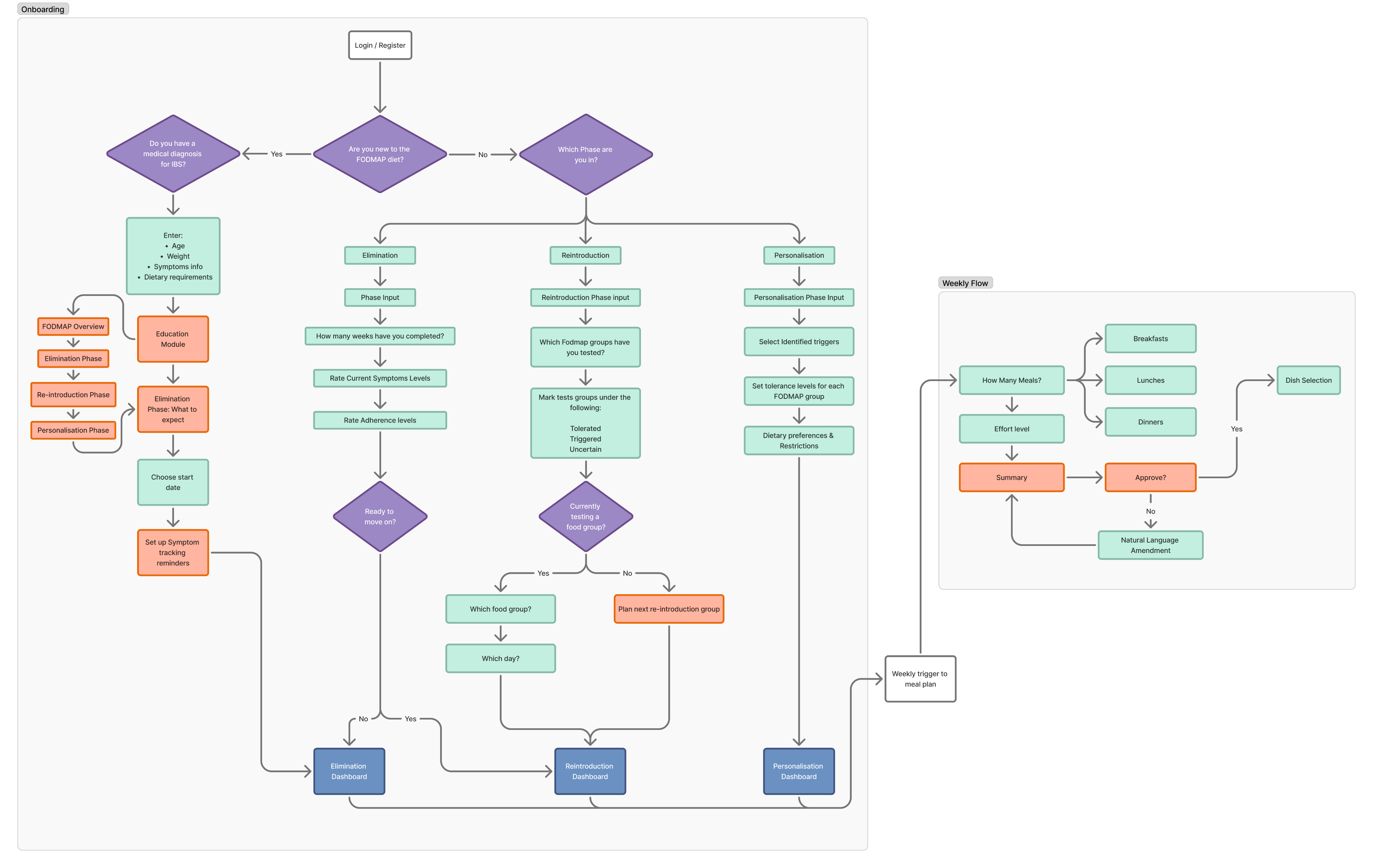


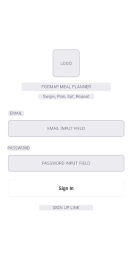




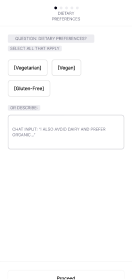









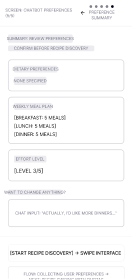




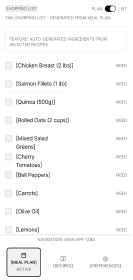




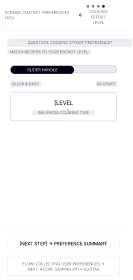


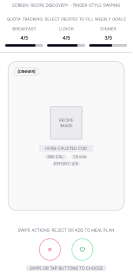
Using the identified opportunities from primary and secondary research, I began ideating solutions, starting with low fidelity journey flows and wireframes. This helped me to explore different ways that the identified pain points could be solved for.
Solution
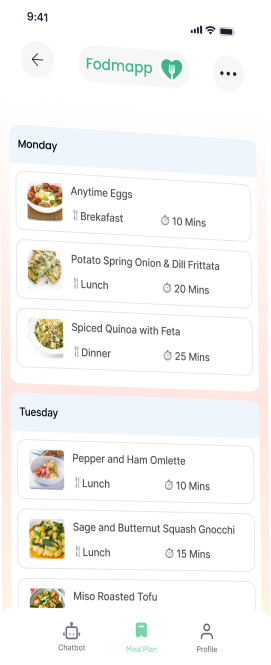
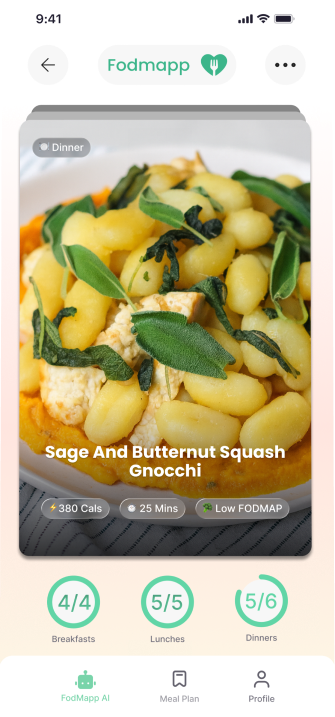
The final design centres on four core features that work together to reduce cognitive load. The personalised onboarding captures dietary phase, known triggers, cooking confidence, and preferences, creating a tailored experience from day one. A weekly meal planner suggests FODMAP safe recipes based on past tolerance and stage goals, with clear visual indicators for potential triggers and allergens.
Users can view recipe cards to check ingredients, and ‘swipe’ to build their weekly food plan based on tailored recommendations based on preferences and FODMAP diet stage.
AI integration via GPT-4 powers smart recipe suggestions based on the users preferences, and their personal progress of within the diet programme. I also prototyped a chat based symptom journal that could detect patterns between meals and reactions. The visual design uses soft greens and warm neutrals to create a calming, reassuring aesthetic, deliberately moving away from medical or clinical UI patterns that might increase anxiety.
With a meal plan assembled, users can use the shopping companion to which showcases FODMAP ‘friendliness’ building confidence in their shopping.
Impact
User testing of the prototypes with three participants yielded positive feedback. Users particularly praised the visual clarity and simplicity, with one stating they felt "reassured" by how clearly trigger foods were flagged. The seamless flow from meal selection to grocery checkout was described as "exactly what I need." This validation confirmed that the core proposition addressed genuine user needs in a way existing solutions hadn't.
This case study represents how user-centred research can identify opportunities in underserved markets and how thoughtful UX design can transform a medically complex challenge into an empowering daily tool.
Beyond the immediate prototype feedback, this project deepened my understanding of designing for vulnerable user groups where trust and accuracy are paramount. The integration of AI demonstrated how emerging technologies can enhance personalisation without adding complexity, provided they're implemented with clear user benefit in mind.

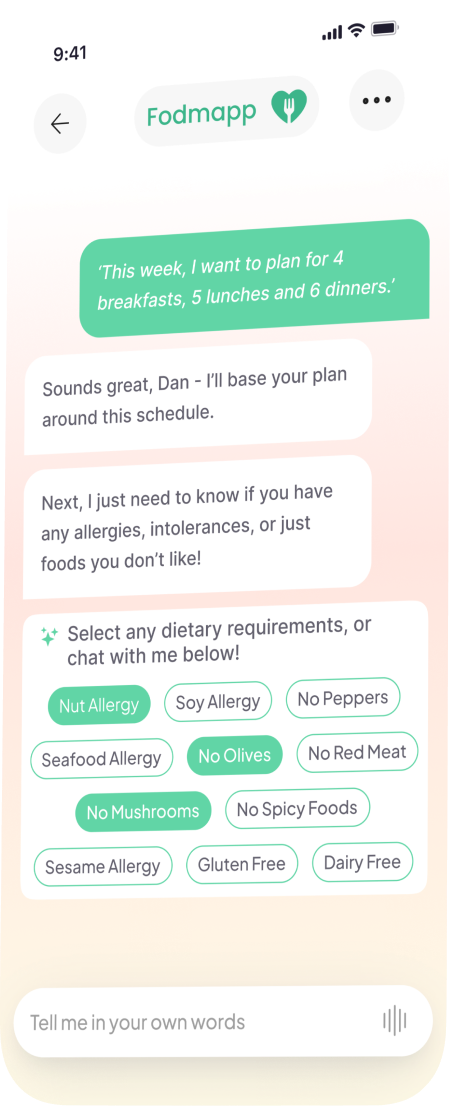

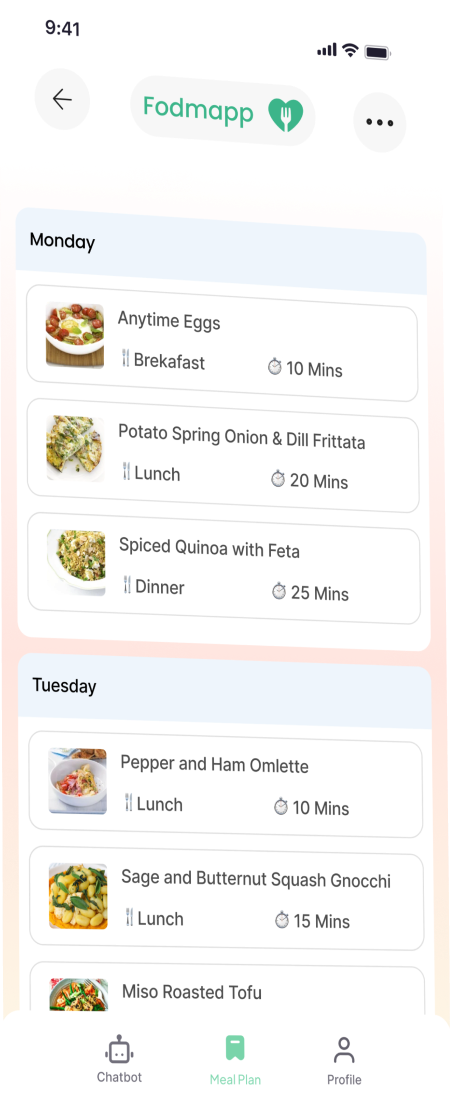

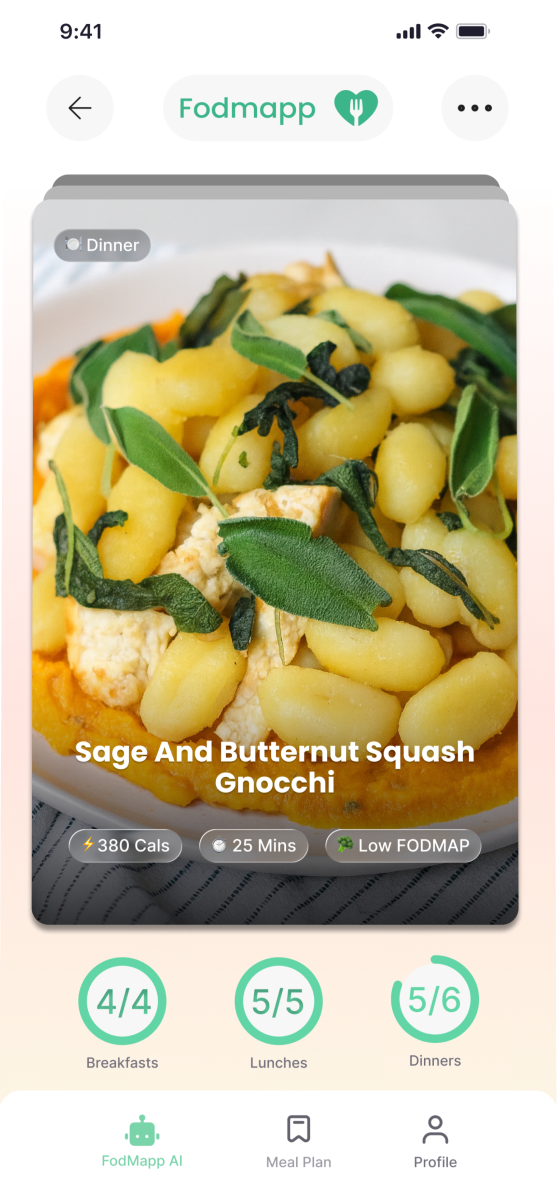
Final prototype screens